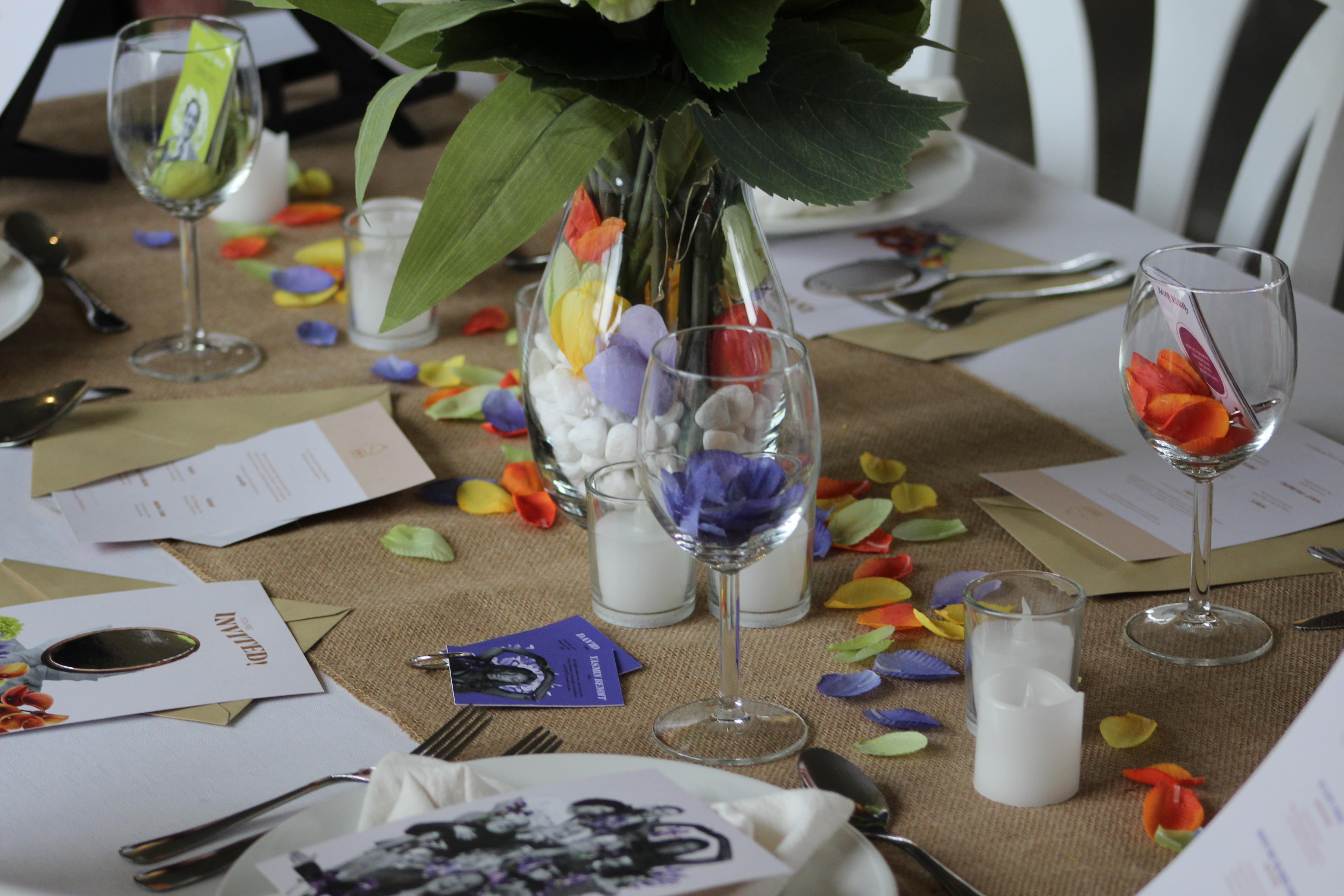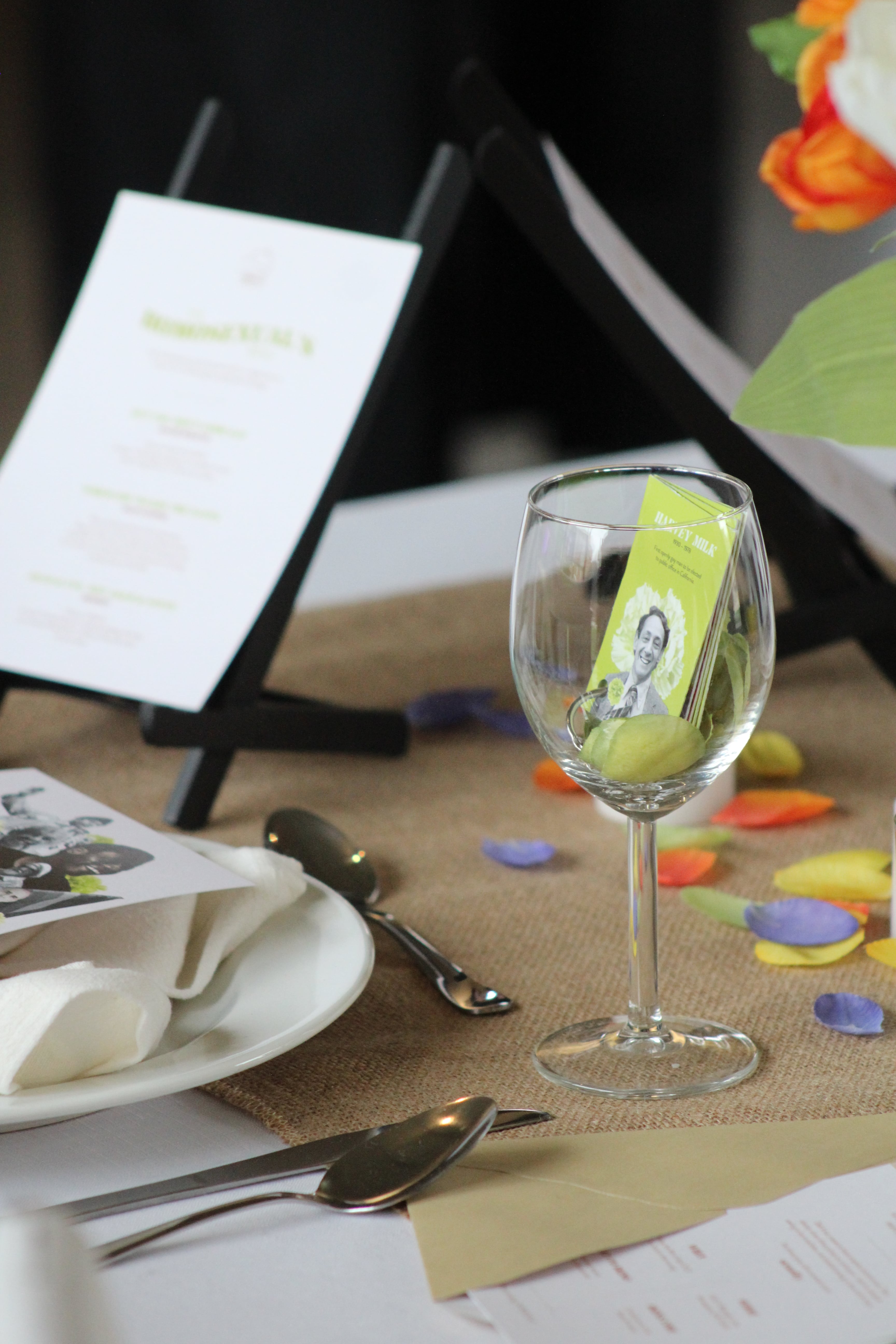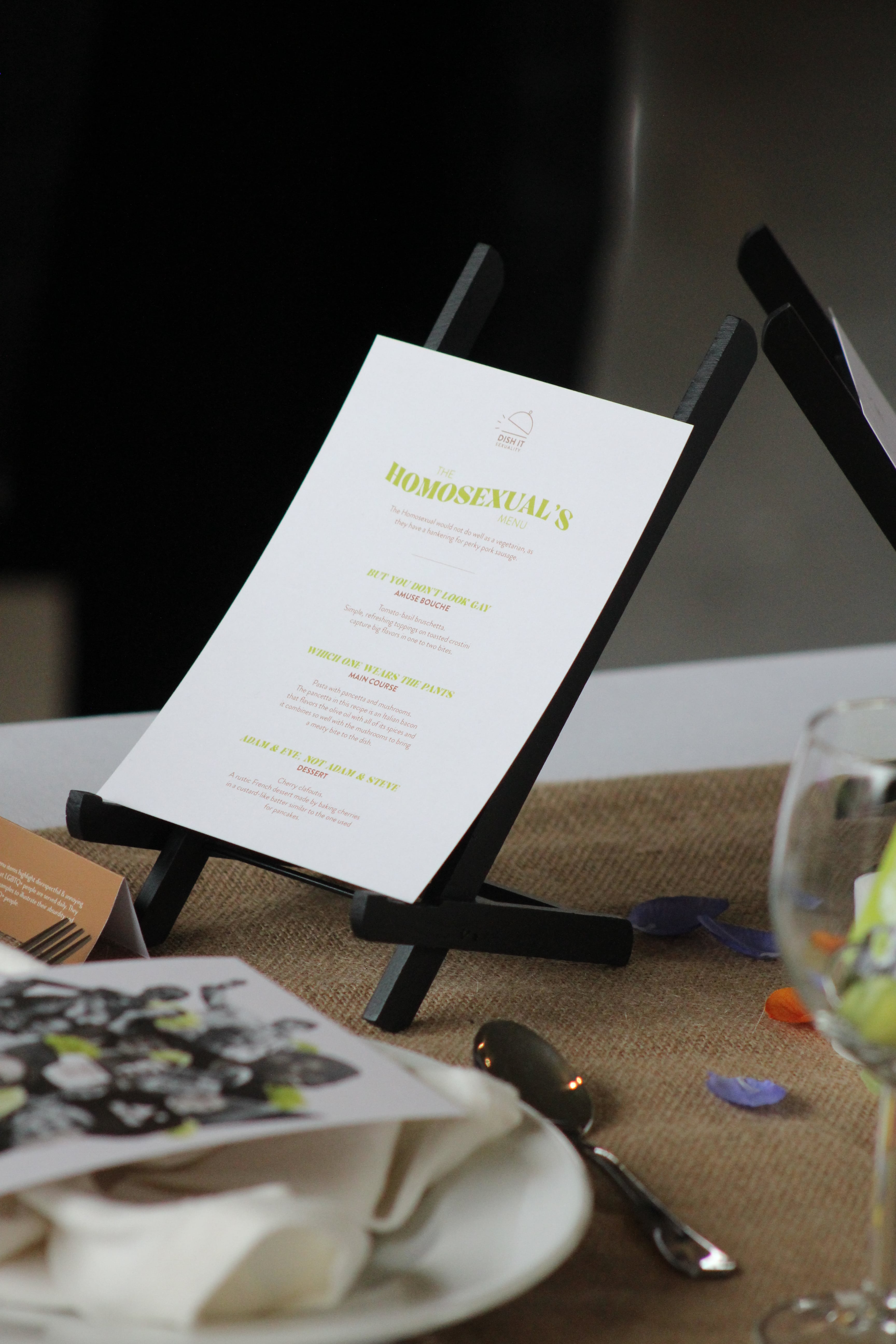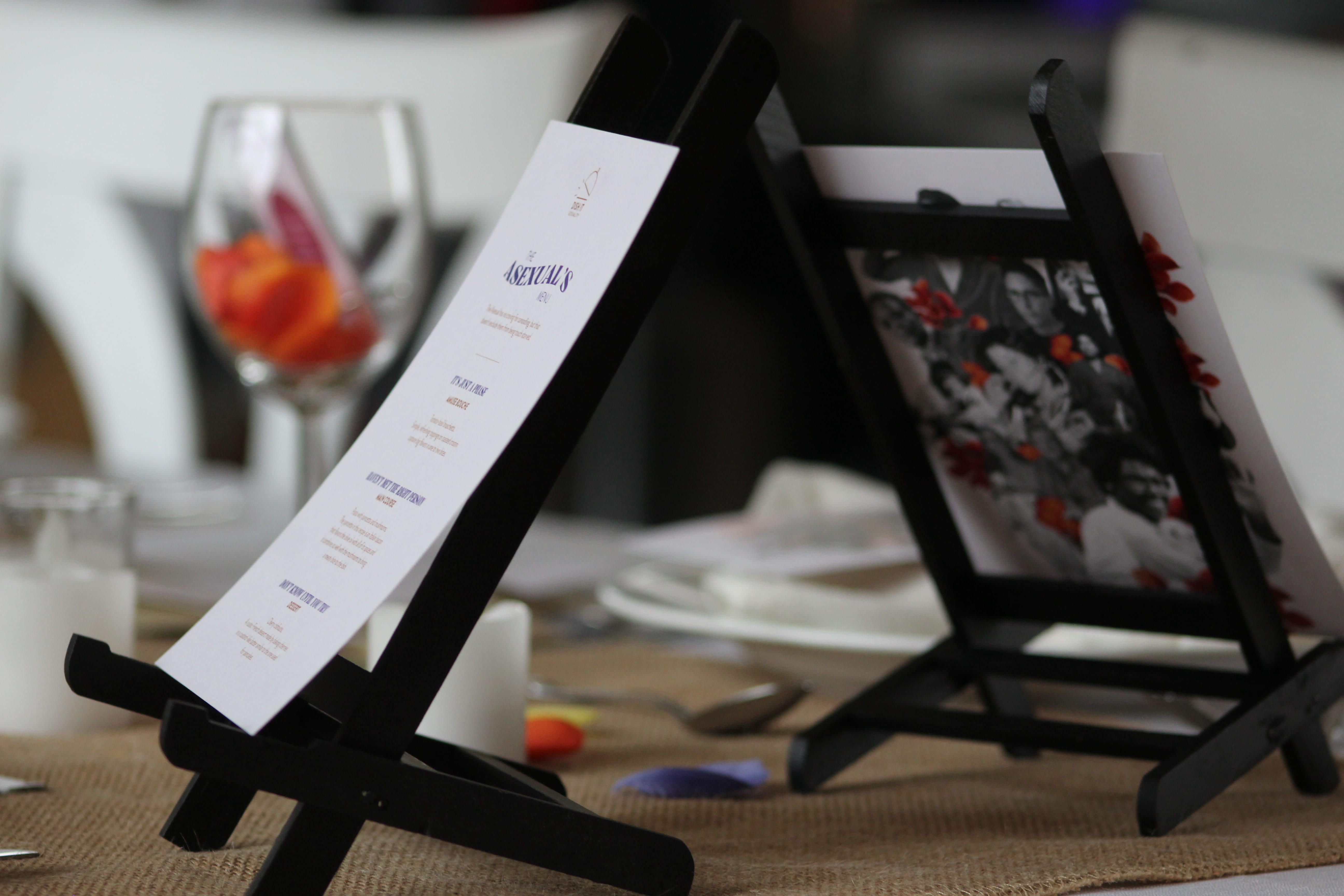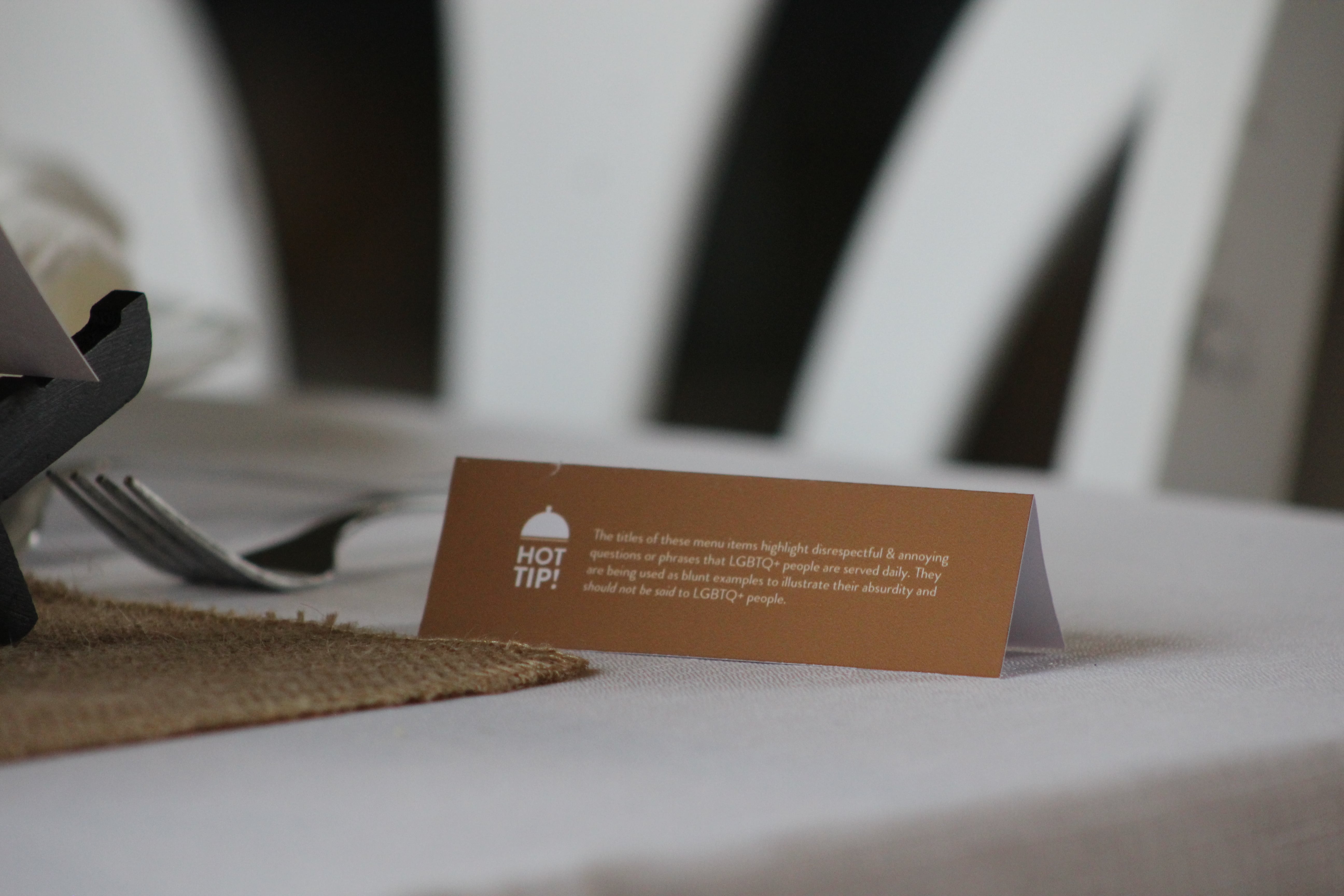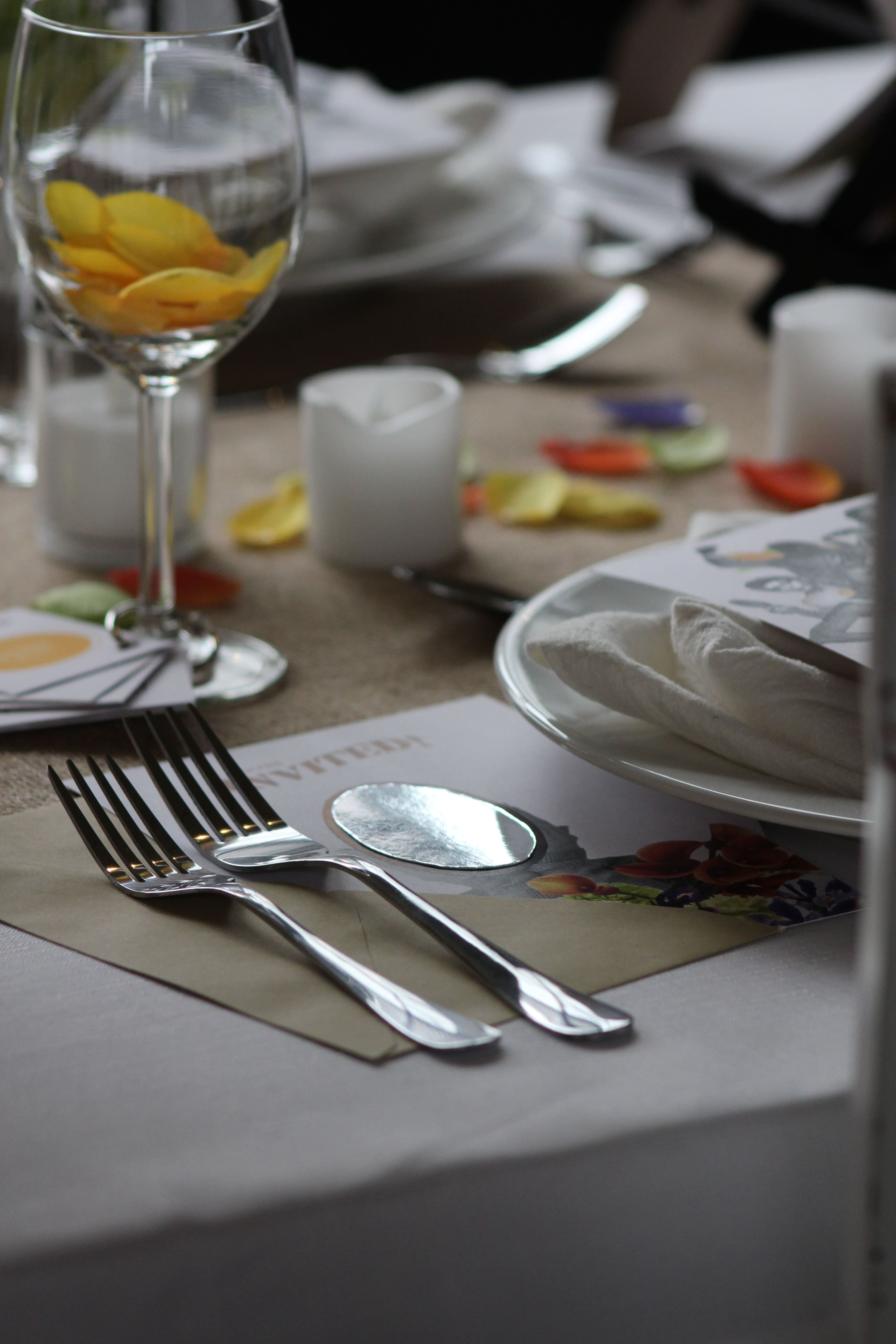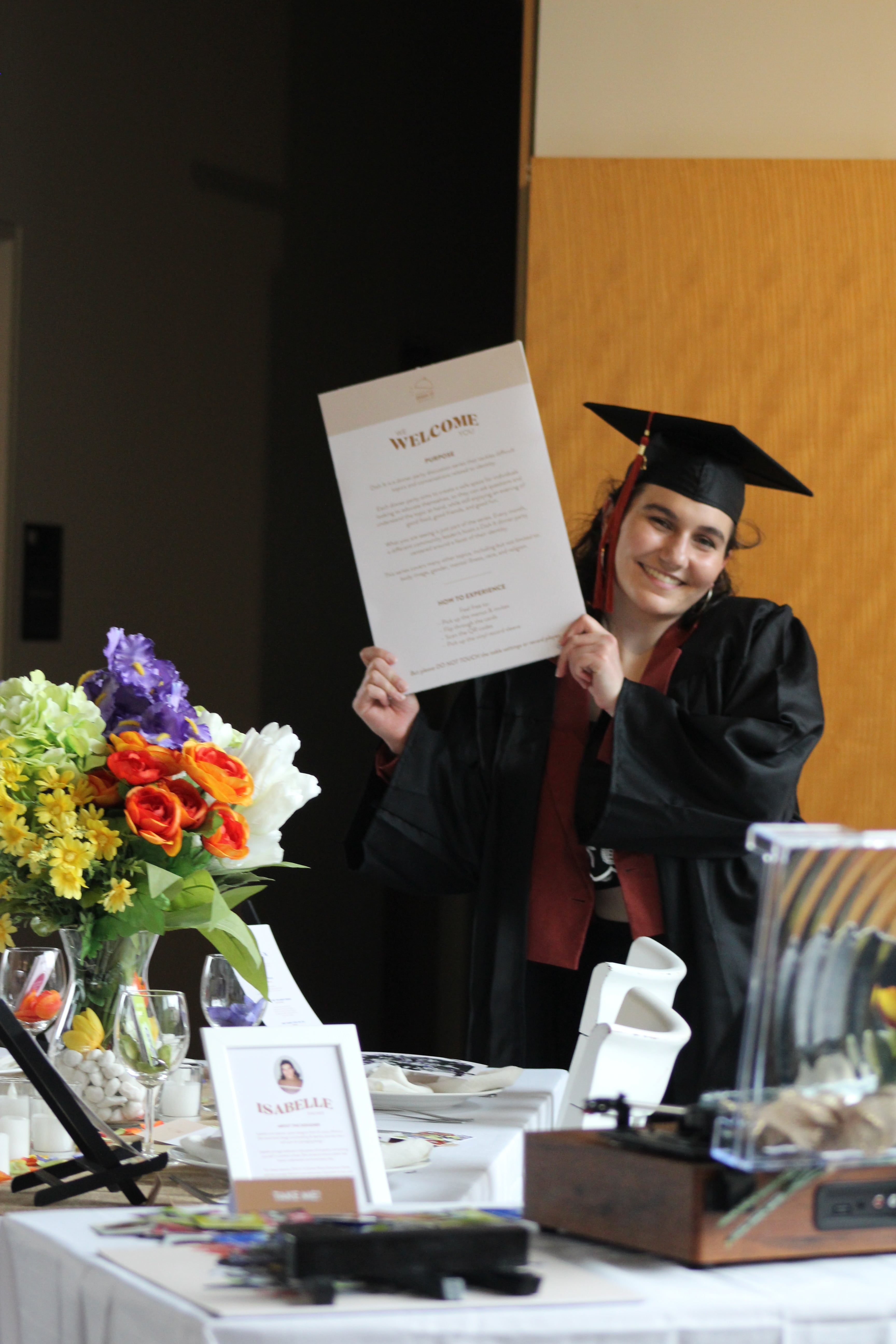
Dish It is a dinner party discussion series that tackles difficult topics and conversations related to identity. It is intended to foster empathy and community. Each identity-driven dinner party aims to create a safe space for individuals looking to educate themselves, so they can ask questions and understand the topic at hand, while still enjoying an evening of decadent food and delightful games.
What you are seeing is just one dinner party out of the series. Every month, a different community leader/s hosts a Dish It dinner party centered around a facet of their identity. While this particular party delves into sexuality, the series covers many other topics – including but not limited to: body image, gender, mental illness, race, and religion.
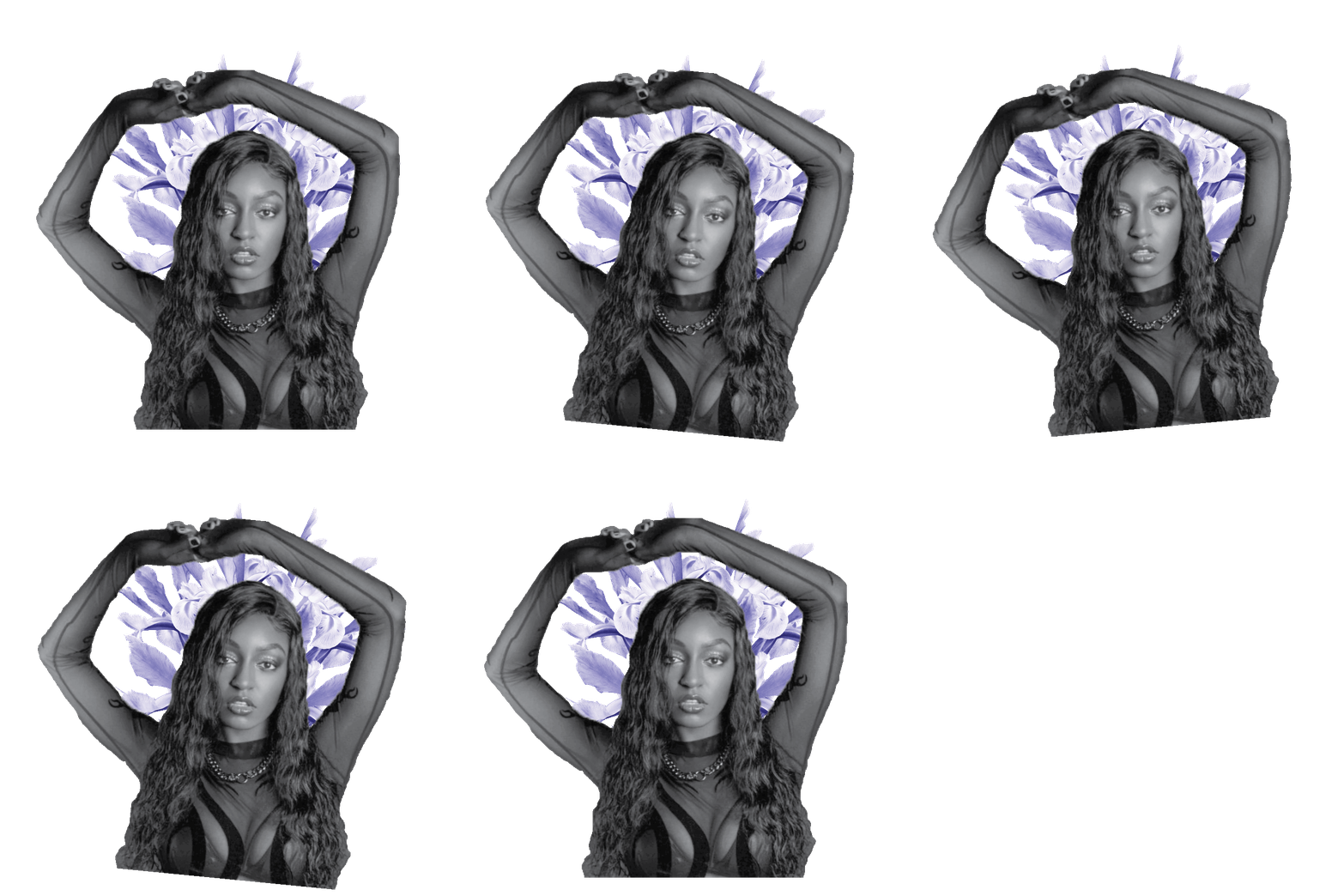
Irises
Asexual

Trilliums
Bisexual
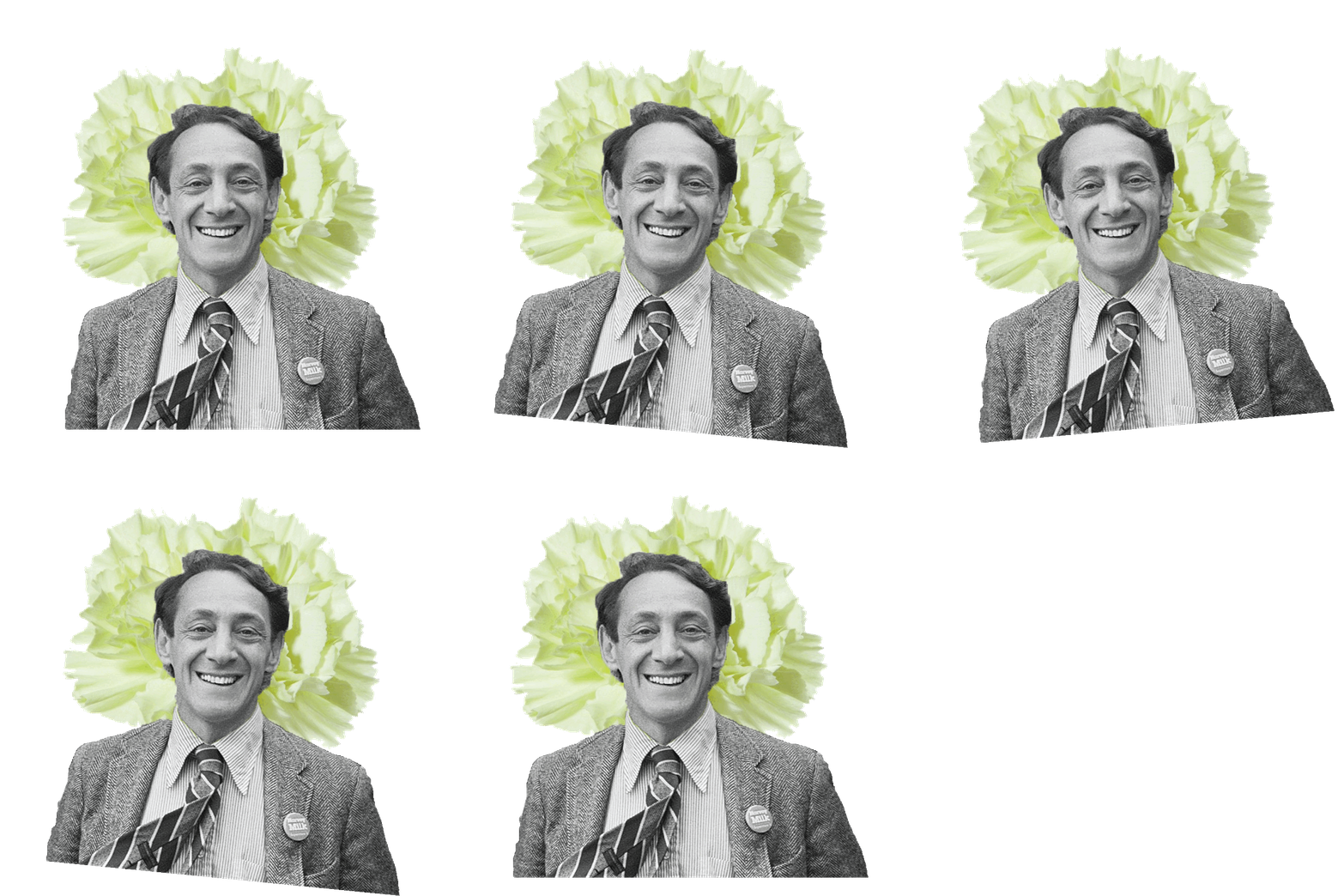
Green Carnations
Homosexual
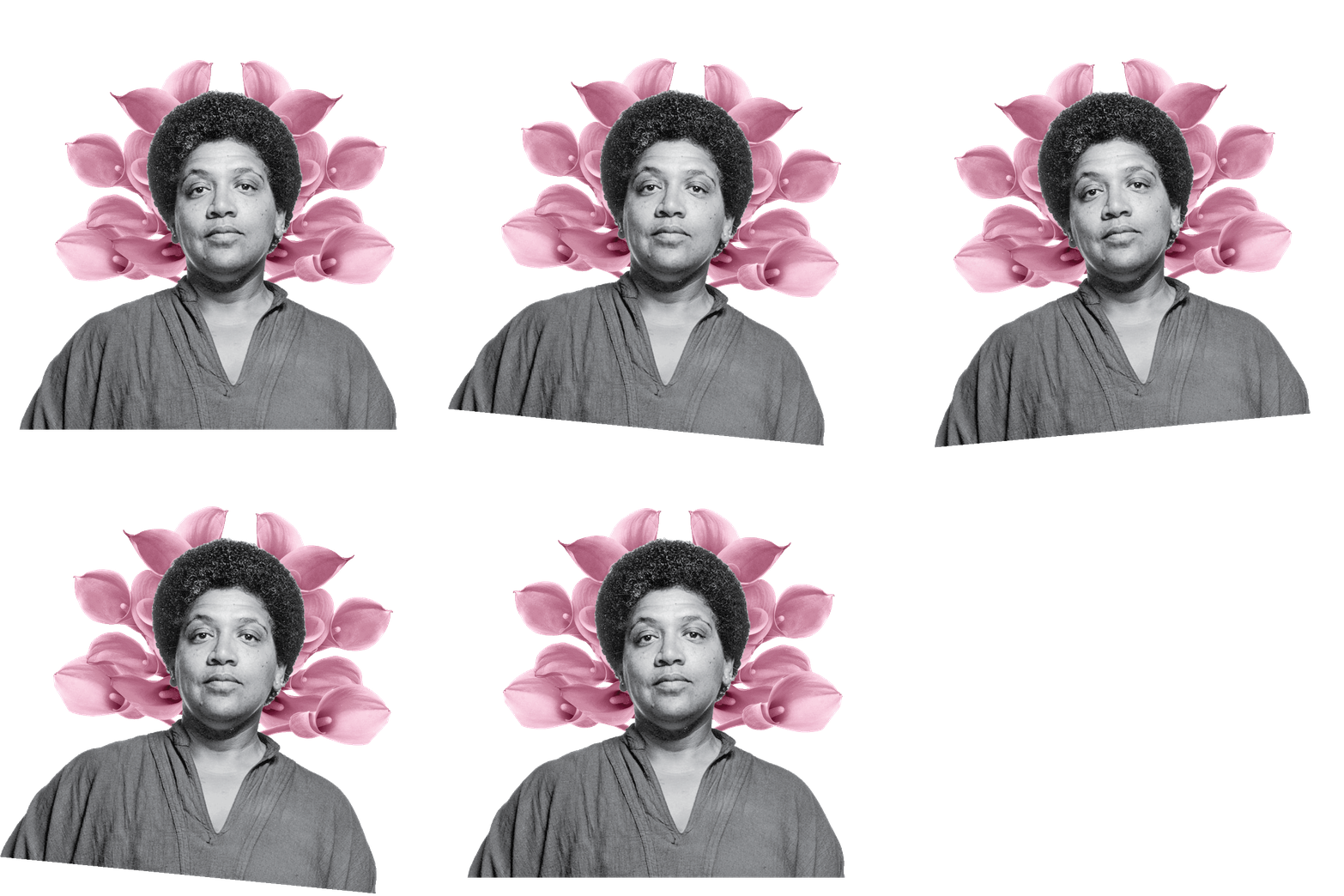
Calla Lilies
Lesbian
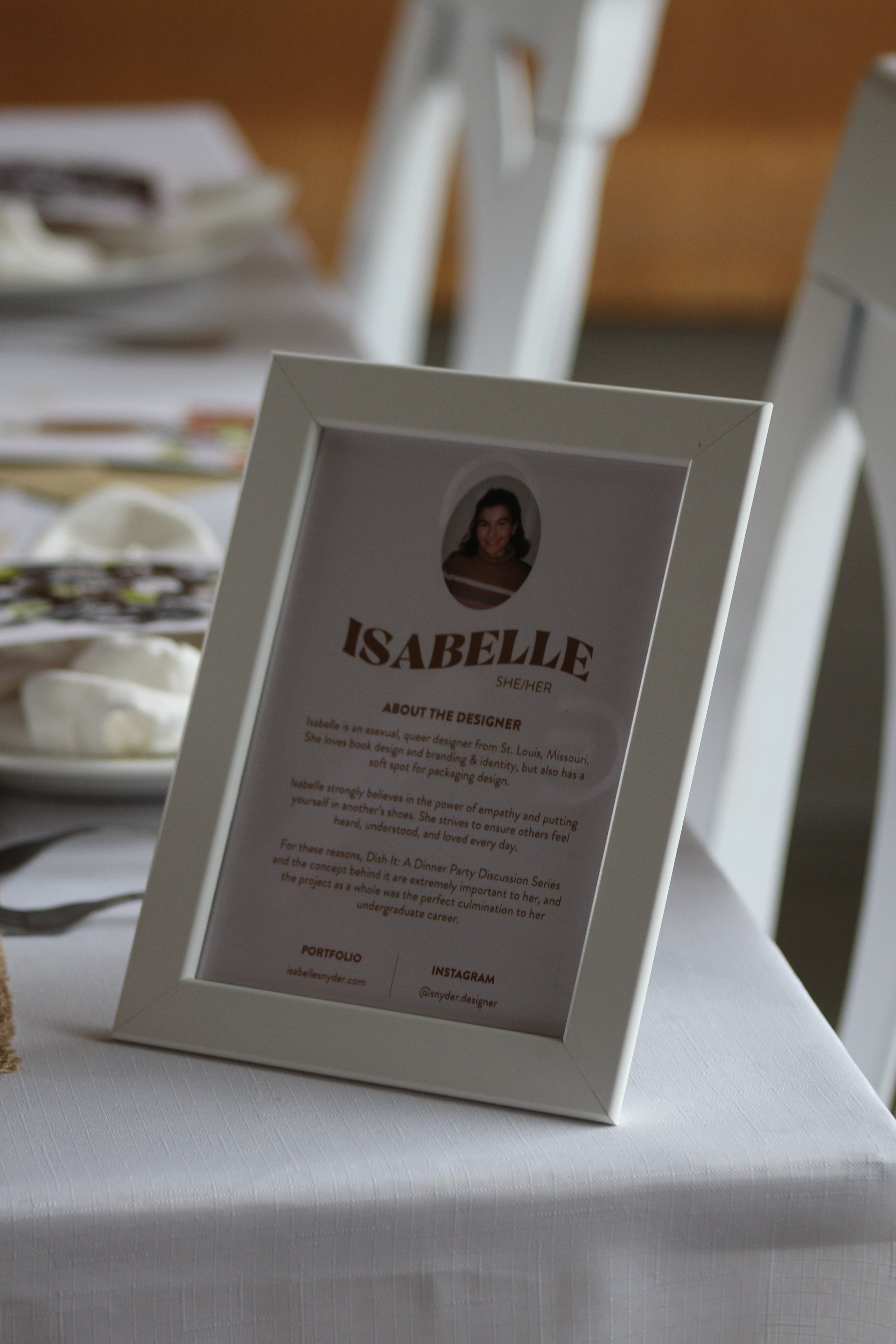
From written paper to physical exhibition, the content featured in my thesis changed significantly. However, the central concepts remained the same: promoting identity exploration and pushing for acceptance and understanding.
My thesis paper discussed how products and their packaging design can be further engaged to help alienated populations fit into social environments, encourage personal growth, and support them in subverting artificially imposed expectations for a person’s identity. Alienated individuals and groups deserve to be represented through the design of everyday products and services in order for them to feel more comfortable in social situations. Only when they feel at ease will they be able to grow and gain confidence in their identity.
Moving forward into developing my exhibition project, I knew I wanted to develop an immersive concept. Brainstorming gave me two ideas: (1) identity exploration games tucked inside a fortune teller’s tent, and (2) an inclusive cozy reading room with a hidden bookcase entrance. Clearly, I did not limit my imagination. I was leaning more towards the first concept, but then someone noted that by enclosing the exhibit within the tent, I would create a safe space for minorities but simultaneously deter individuals within the majority from exploring and learning.
Therefore, I decided to tweak my concept. Instead of preaching to the minority choir, my new goal was to design something more open, that would speak to a community at large and call for their curiosity and understanding.
I landed on the idea of a dinner party event that doubled as an intentional, safe space for conversation.
The solution I developed to accomplish this goal stemmed in part from personal experience and in part from an imagined amalgamation of resources. From personal experience, a friend’s mom hosts elaborate dinner parties for specific holidays throughout the year, and always manages to maintain a lively atmosphere, chatty guests, and creatively-named food items. The exemplary mash-up of resources include the installation artwork by Judy Chicago titled The Dinner Party, the Museum of Us located in San Diego that hosts a variety of unique, interactive exhibits, Murder Mystery Dinner put on by Student Unions & Activities, and a plethora of community organizations such as local libraries and recreation & community centers. These resources shed light on what information can be included, how to present information, event planning logistics, places to host, examples of community leaders, and much more.
The first step to designing one of these dinner parties was to choose its topic. I vacillated between mental illness, gender, and sexuality. In order to narrow it down, research had to be done and system mockups had to be sketched out. I had determined I wanted at least four categories in my system – four subcategories within the overall topic to match up with four place settings at the dinner table I was creating.
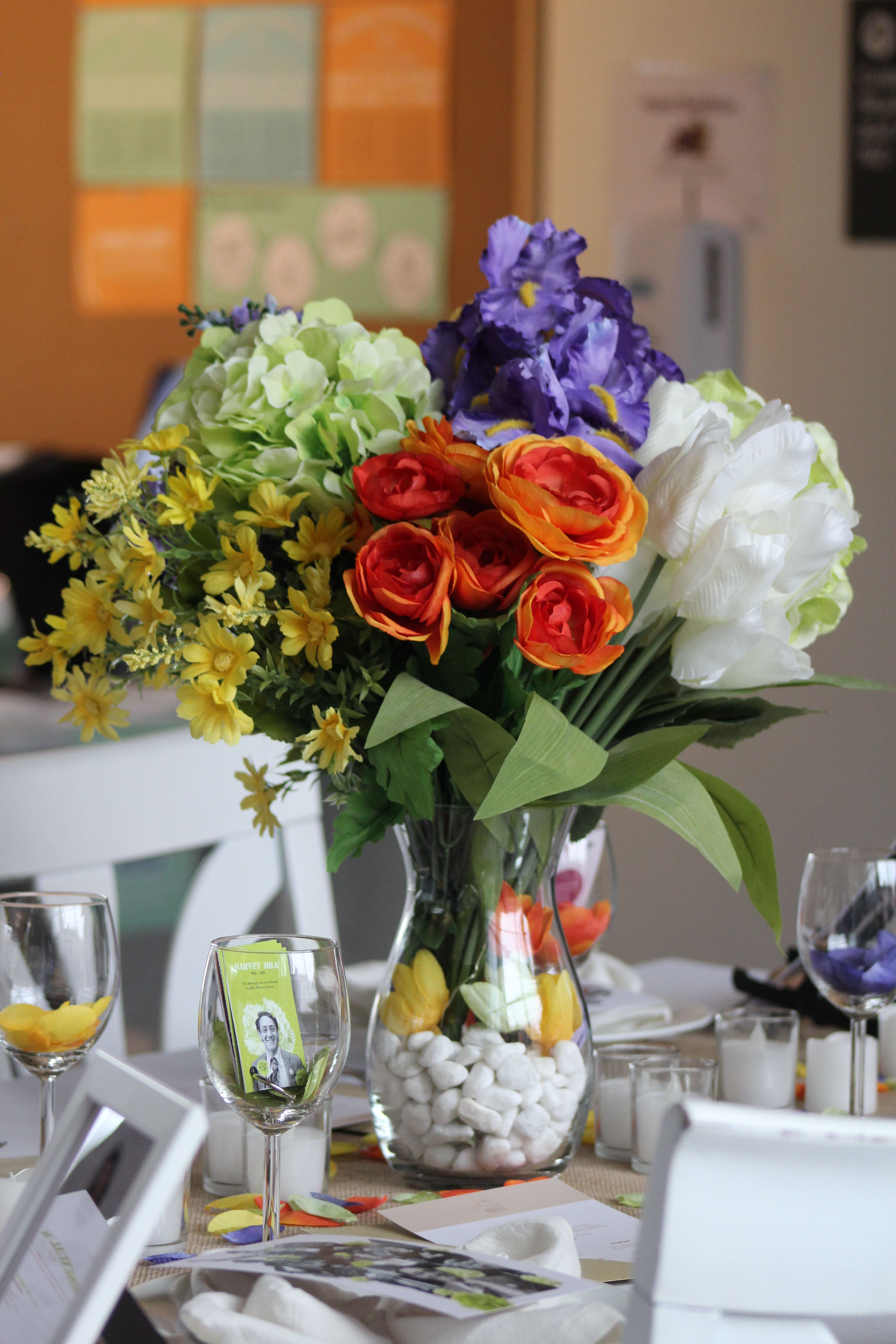
Ultimately, I chose to move forward with sexuality as the dinner party’s topic. While there are more than four sexuality labels, there were four common labels I had fleshed out: asexual, bisexual, homosexual, and lesbian. Additionally, I had made an interesting connection, which was that certain flowers reproduce asexually. Flowers were a fantastic graphic element for me to latch onto while developing my dinner party’s visual language. From there, I discovered that there were flowers that symbolized specific sexualities: green carnations for gay men, trilliums for bisexuals, and lilies for lesbianism.
Simultaneous research continued, with comprehensive lists of items found at dinner parties and visual research to cultivate the budding brand identity. Then, following the establishment of the four categories, I began collecting noteworthy figures from each sexuality label and took down their name, several photos, period of time they lived, and what made them particularly noteworthy.
Finally, I pieced everything together.
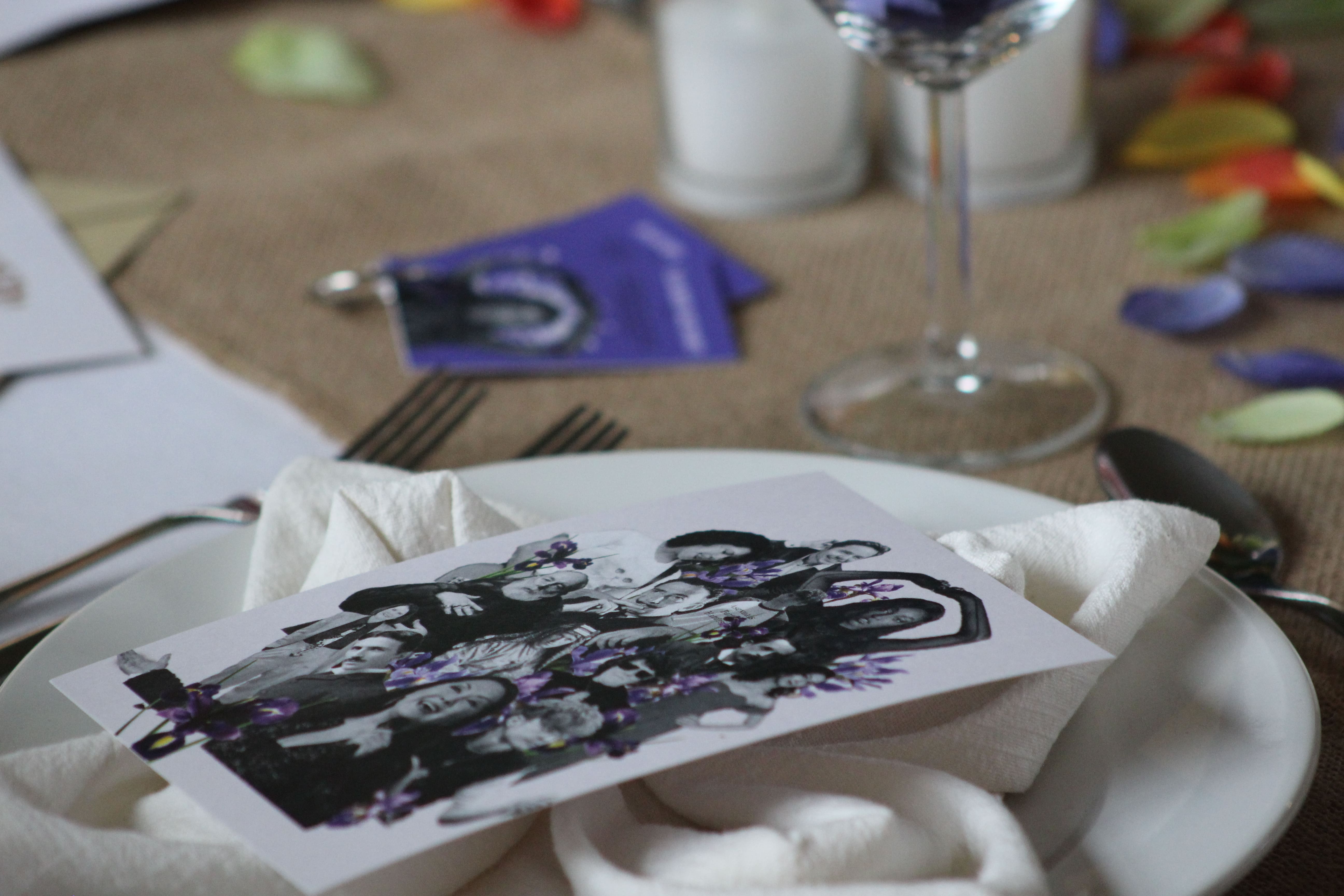
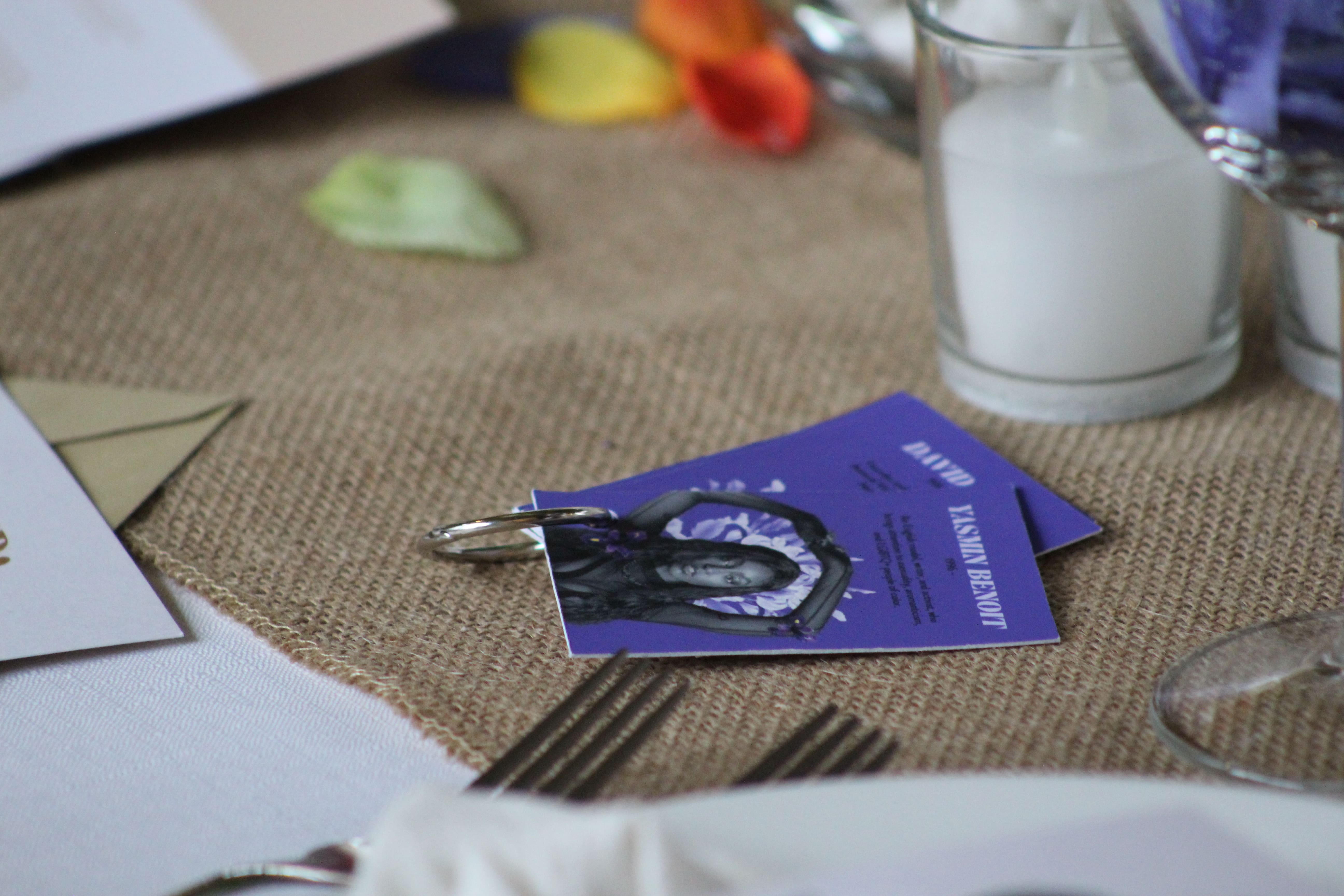
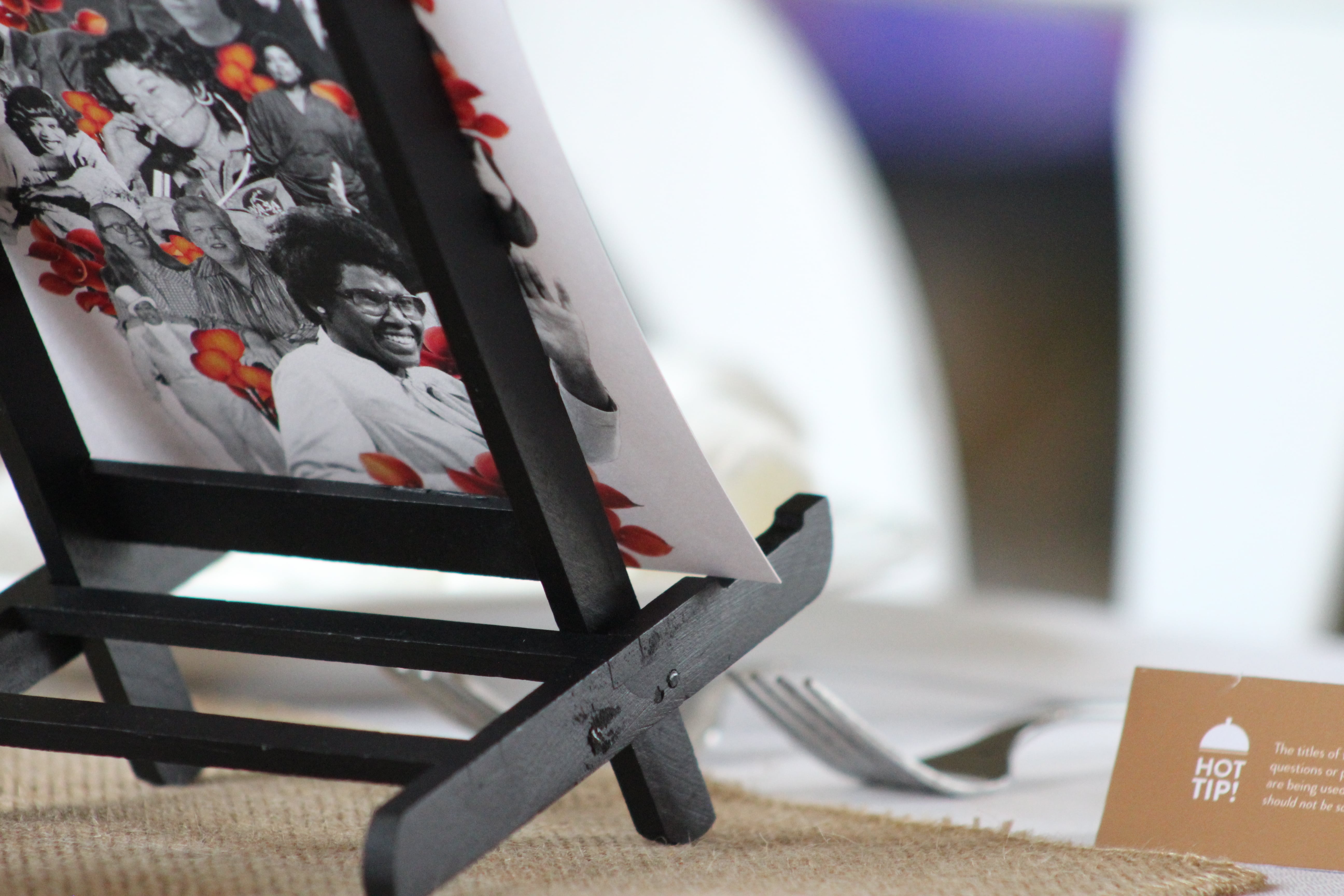
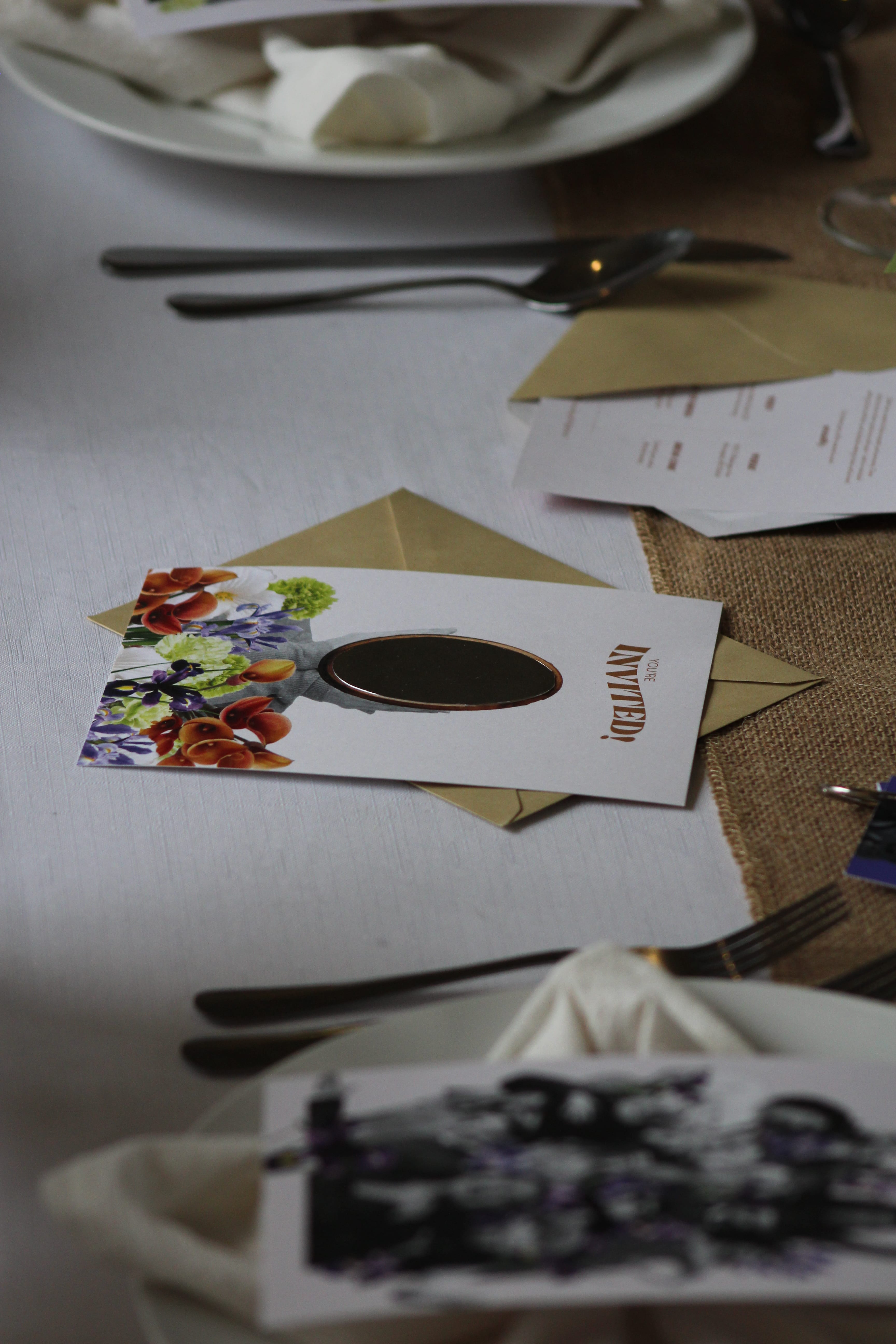
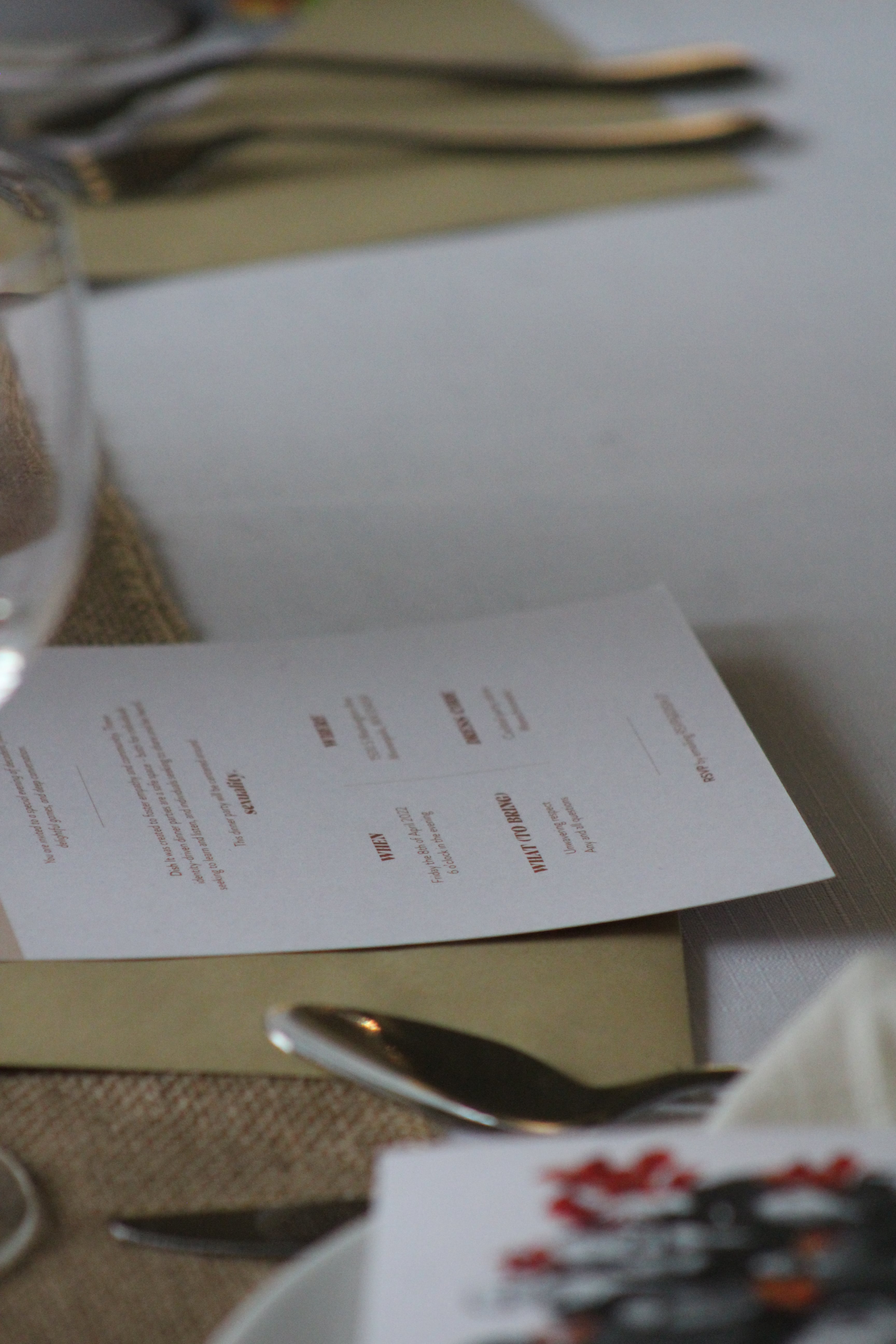
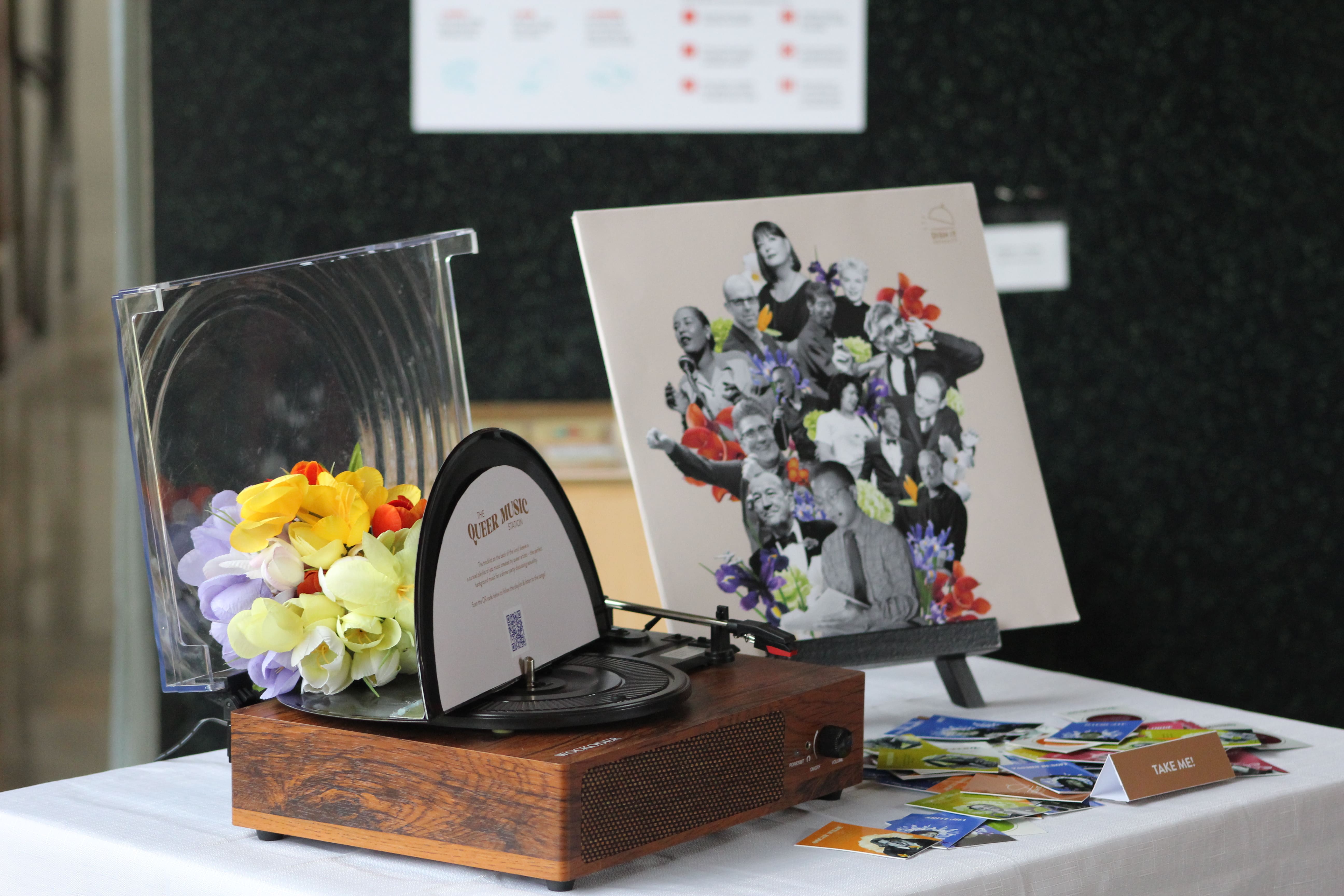
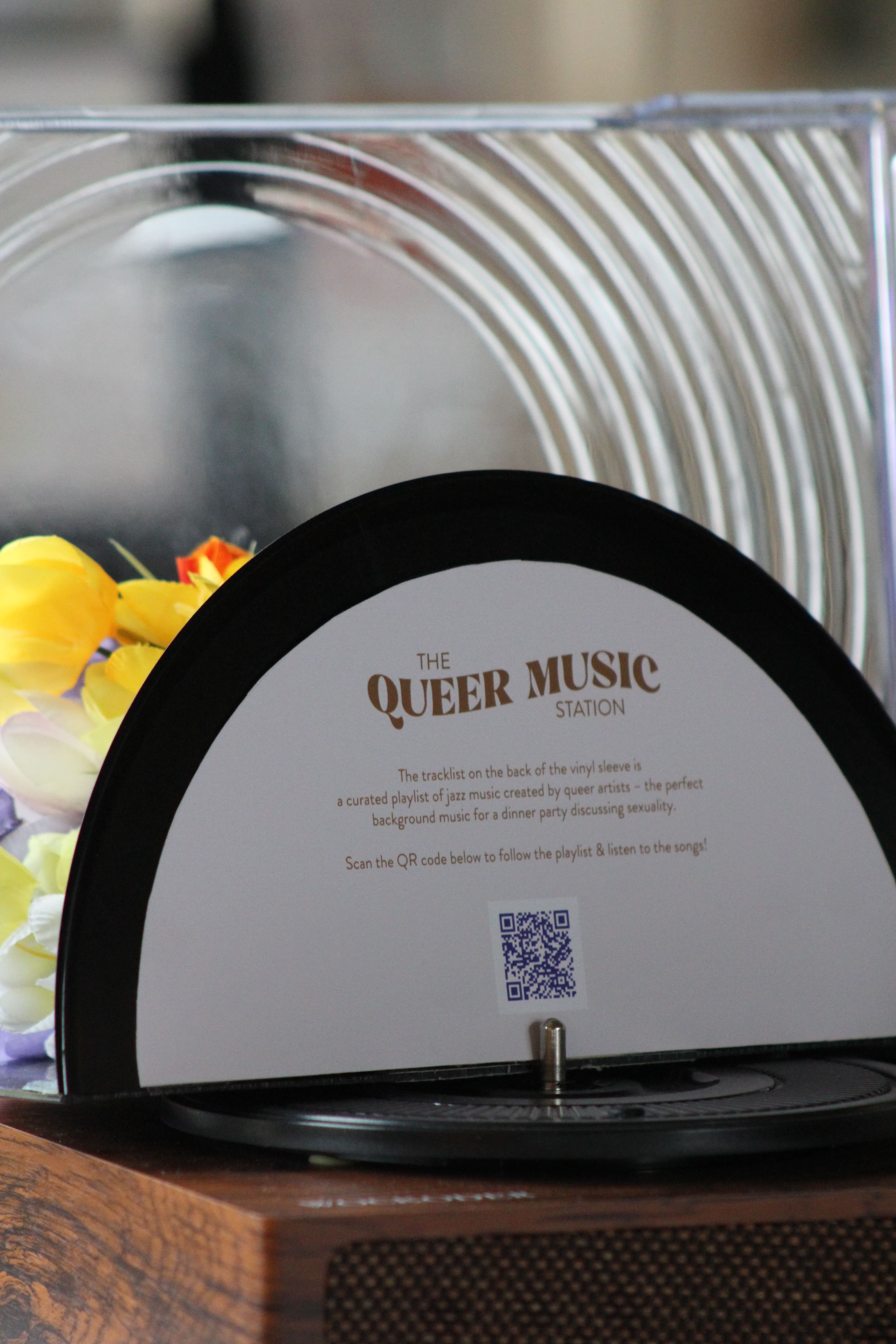
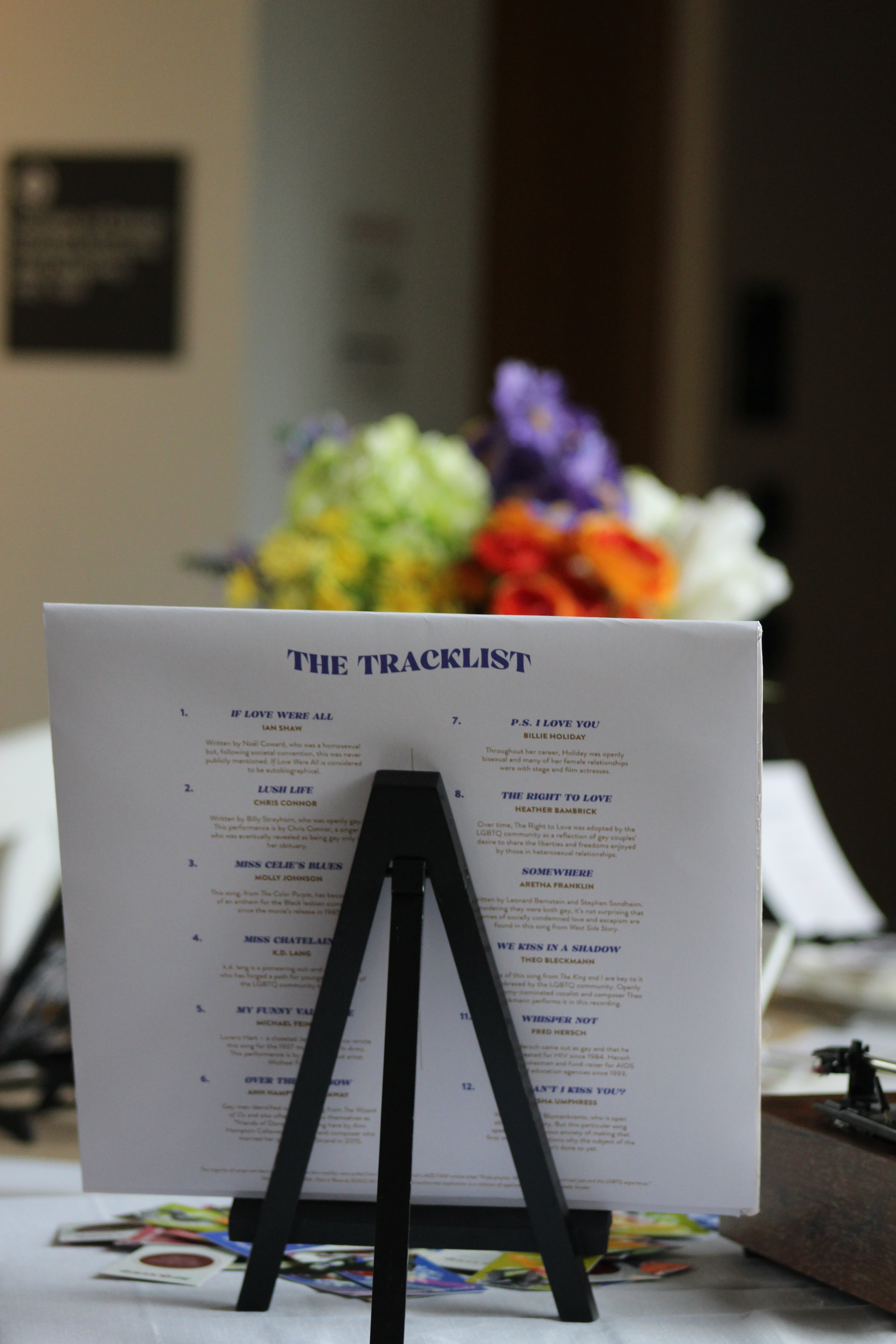
I designed invitations detailing the who, what, where, when, why, and how – with a mirror on the front for a personalized touch. I designed a menu for each sexuality – with collages of the LGBTQ+ figures I collected on the back and absurd menu titles on the front. I designed a small set of cards for each sexuality – with information about the LGBTQ+ figures from the collages on one side and prompting Q&A questions on the other. I designed a music station – with a sign made from an actual vinyl record and a curated playlist of jazz music created by queer artists.
Now – take a seat à la table, as there is plenty to chew on.